Work

BBC Primates: Episode 1

April 25, 2020

Over the past two years I’ve been working as the series cameraman on a three-part BBC series called Primates about monkeys, apes, and prosimians. The ambitious team planned to film species that had never been filmed before, behaviours that had never been captured, and use some highly innovative technology. I was lucky enough to film six sequences across the first two episodes.

For the first episode, The Secrets of Survival, I travelled to Brazil to film bearded capuchins for the opening sequence. When I started working in wildlife documentaries I worked as a camera assistant filming this species in the same region for a Nat Geo series on Brazil, so I was excited to be back to see them and to film some new behaviours. We were working in Serra da Capivara National Park in the North East of the country where the sandstone outcrops dominate the arid landscape.
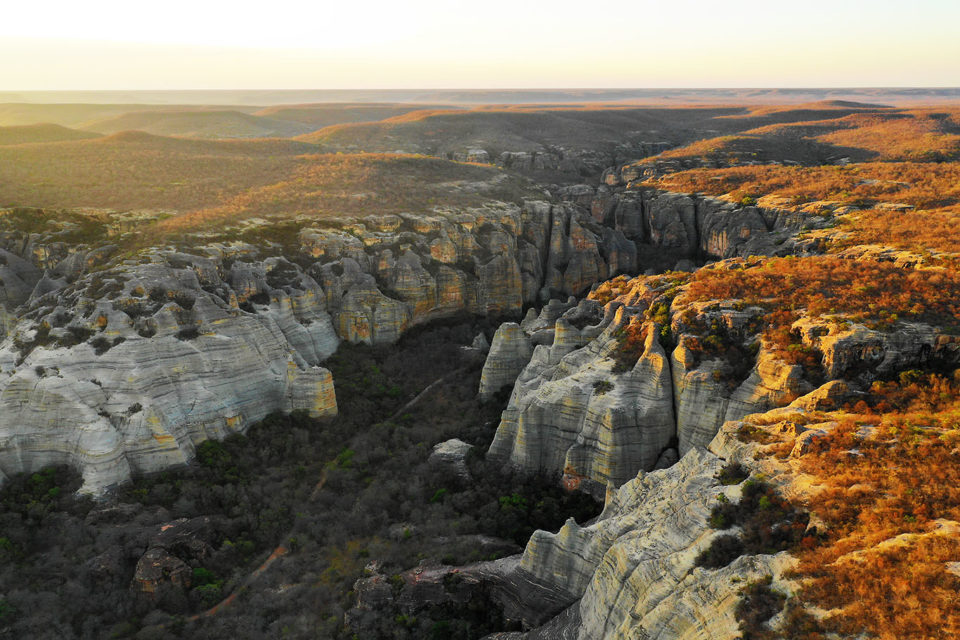
The alien landscape of Serra da Capivara. Very difficult to keep up with the capuchins if they decide to head up the outcrops.

We spent each day following a large group up through the spiny arid landscape, over the massif, and when we lost them went searching for them with our drone.
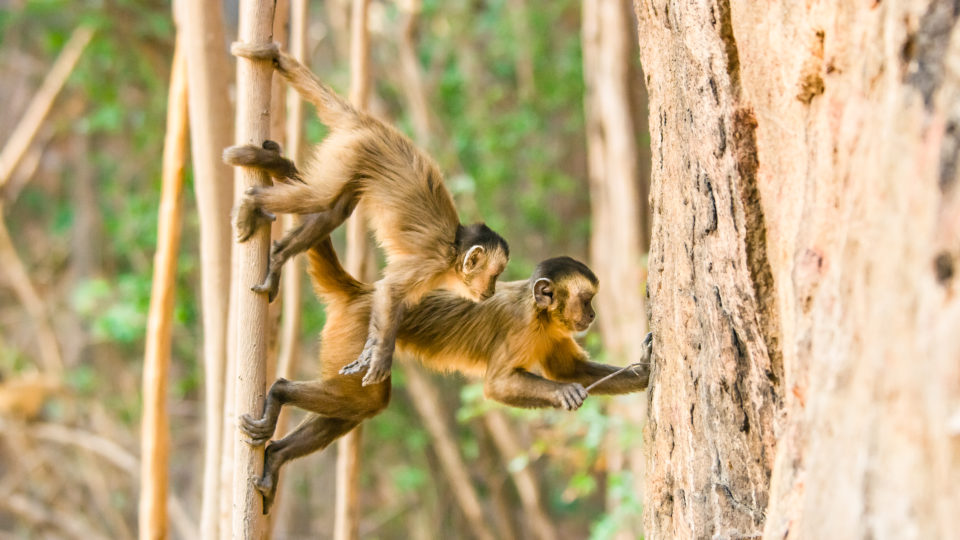
Bearded capuchins learn tool use by watching others.

One day I bumped into João Leite, a ranger who had helped us back in 2012. He told us that since working with us a ranger had been killed by poachers and during the attack has been shot himself. The hunters came in looking for animals like the armadillo (tatu-bola) and met the rangers unexpectedly. The lack of funding meant the 300,000 acre park was patrolled by only a handful of unarmed rangers. He continues his work as a ranger and has become a spokesperson for justice and protection of the park.
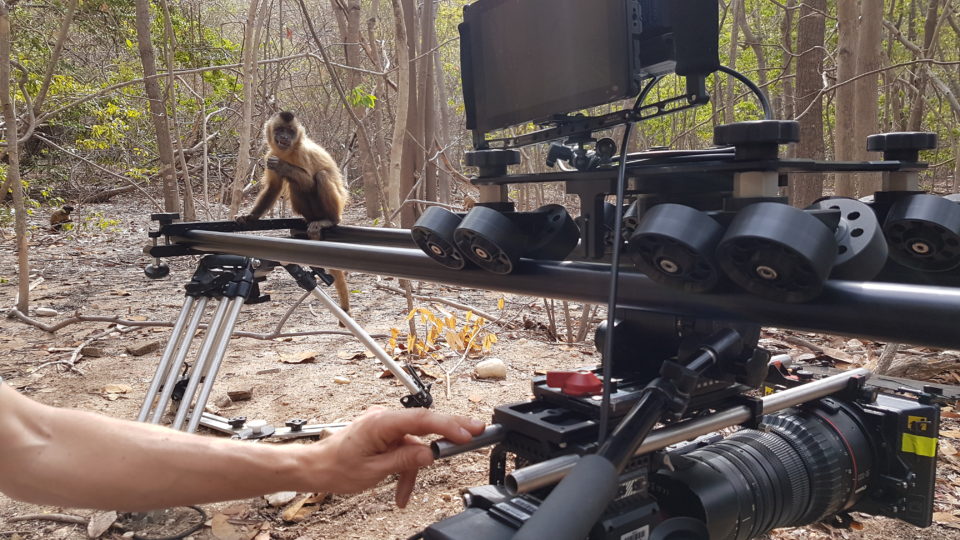
The young capuchins were very inquisitive and loved exploring the dolly.

The second sequence I worked was filming bushbabies breaking in to Pretoria Zoo in South Africa. These little guys were sneaking in to the zoo over the barbed wire fence at night to eat from the fruiting trees within the grounds.
As night fell over Pretoria Zoo the bushbabies made their entrance.

With Luke Barnett on long lens and director Vicki Buckley spotting I spent my time trying to sneak cameras in close to the little furballs where I thought they would travel through or banana flowers I hoped they might visit. They were tiny and bounced around the trees at top speed, very difficult to film, especially at night!
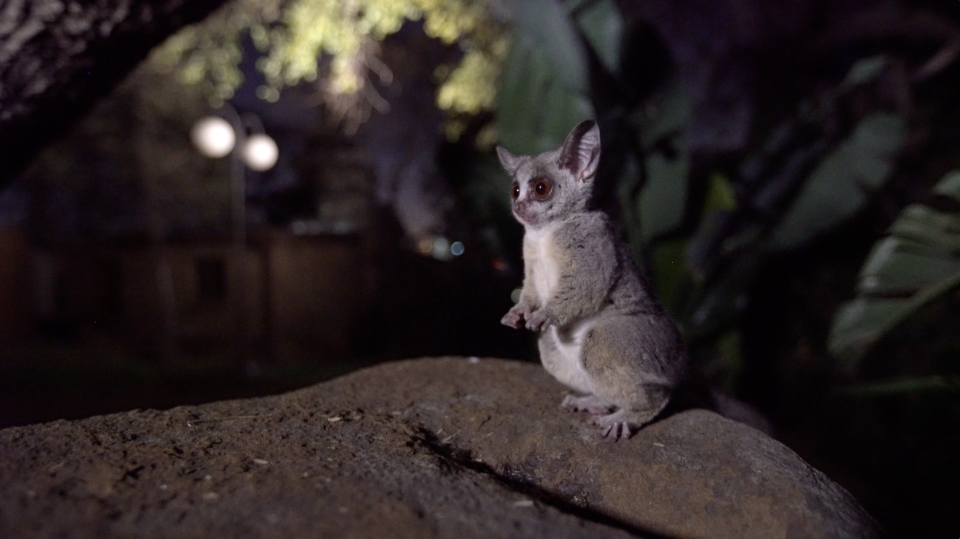
The bushbabies massive ears allow them to find insects in the dark.

The third sequence I filmed is the finale of this episode: rhesus macaques in Swayambhunath Stupa, Kathmandu, Nepal. The macaques made the temple their home and lived alongside the monks and the worshippers. I spent a month with Abi Brown following them round, half the time spent with a stabilised camera gimbal mounted on an Easyrig and the other half at their favourite swimming pool with a high speed Phantom camera.

Having a stabilised camera attached to your back meant I could follow the monkeys while they got up to all sorts of mischief.

It was fun to show the macaques living alongside the worshippers at the temple and good to see everyone’s (mostly) positive reaction to them. The jumping and diving would bring big crowds when they decided to perform.
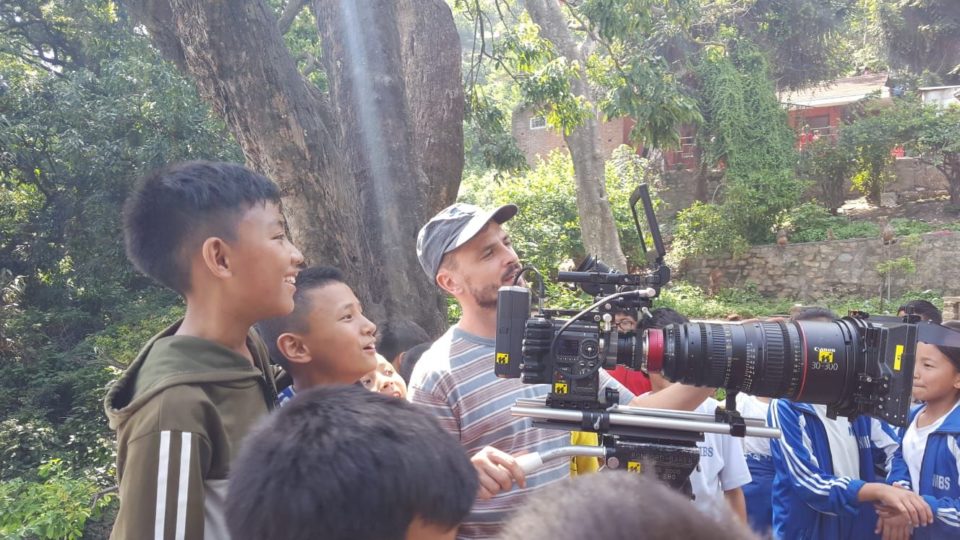
School groups loved seeing the slow motion replays of the jumps! (Photo: Abi Brown)

The episode aired on Sunday 26 April 2020 on BBC1 at 8.15pm and is available on iPlayer.
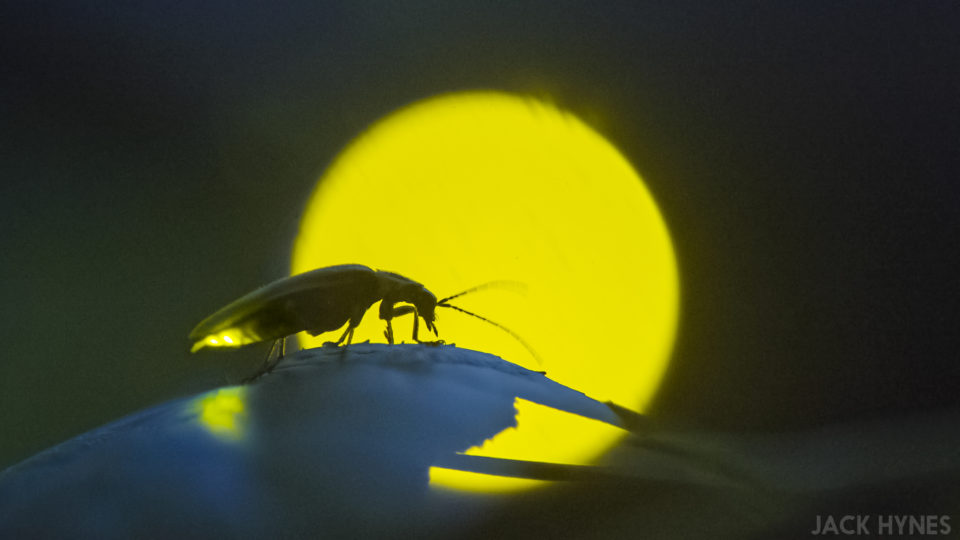
Fireflies for Seven Worlds, One Planet

November 27, 2019

I visited the U.S. last year to capture a synchronous firefly spectacle for BBC’s Seven Worlds, One Planet. We were hoping to film a population of synchronous fireflies that had only recently been brought to the attention of the scientific community, these large displays were only thought to occur in a few other places around the States.

I was reunited with Lynn Faust, a firefly expert, with whom I had filmed for Attenborough’s Life That Glows. Her passion and energy is infectious and we were so lucky to have her on the team, searching far and wide for the greatest spectacles. Her unending knowledge of the fireflies, their peaks, their behaviour, and even their anatomy was invaluable as always.

Using a motion-controlled slider allowed us to move through the fireflies during our timelapses.

Where we filmed the fireflies peak in May and the further north you travel the later the display occurs. This does vary between species but warmth has a big effect on these insects and you can calculate when they will have their highest densities by counting the number of warm days there has been during the year (it’s a big more complicated than this really, but that’s the jist). This would have been very difficult for us to do on our own, without Lynn’s help we would have been lost.

We had some impressive weather while there, but these heavy rains can stop filming for the night, or shorten the display.

The sequence will be part of the North America episode of Seven Worlds, One Planet shown on BBC in December 2019. The series will be broadcast in the U.S. on BBC America, AMC, IFC and SundanceTV from January 18th 2020.

In Production

April 26, 2019

Every programme I have filmed for since 2017 is still “In Production” as is often the way with natural history films. It takes a long time to see your work, and it can be years later when the project is broadcast. In 2018 I filmed three sequences for BBC’s Primates, for BBC’s One Planet, Seven Worlds, for Life Force 3, and for Offspring’s Luna. Unfortunately none of them will hit the screens until at least Christmas 2019, I’ll let you know when they do!

One Planet, Seven Worlds

Age of the Big Cats update

September 29, 2017

I recently filmed for Age of the Big Cats, a three-part series on the big cats. The story of how they came to dominate the world and how their prehistory shaped the animals they have become today. I’ve filmed jaguars, leopards, lions, cheetahs, and snow leopards all in their natural habitats.

The series was released on CuriosityStream in September 2018.

Attenborough and the Empire of the Ants

July 15, 2017

I have recently finished filming for a programme with David Attenborough on ants in the foothills of the Swiss Alps titled Attenborough and the Empire of the Ants. The story is of two physically identical species of ant that live in the same area but have two very different strategies to survive the harsh environment.

When I first visited them in the Spring of last year the ants were just starting to leave the nest after their winter slumber and were surrounded by snow. In fact it started snowing while we were filming and using a very powerful macro lens you could see the giant snowflakes come crashing down hitting the ants. However these ants thrive in this climate, their many adaptations to the fickle weather at the top of the mountains are remarkable and have allowed the development of two very different ways of survival: war and peace.

I went back to Switzerland for five more trips to visit the ants at different times of the year and to see the dramatic landscape change. The cows and their bells were always to be heard in the distance.

Getting up close and personal proved very difficult when your subjects have a head the size of a pinhead, so specialist macro lenses and relay systems were used to magnify while keeping a useable depth of field.

The programme will be on BBC2 around Christmas time.